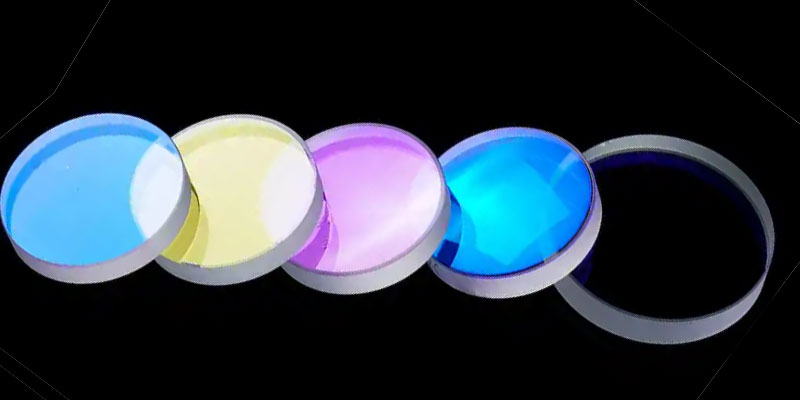
An Light Adjustable Lens is a type of optical element capable of altering its own optical properties, finding widespread application across multiple sectors. It can modulate light refraction according to voltage, such as in certain optical systems where focal length is adjusted by changing curvature to achieve millisecond-level automatic focusing. It may also modify light power through electrical or mechanical actuation, for instance by altering chamber geometry or material arrangement. Within laser processing, these lenses demonstrate exceptional performance, resolving numerous technical challenges and contributing unique capabilities to diverse industries.
Light Adjustable lenses also play vital roles in common sectors such as security, automotive, and digital cameras. In automotive applications, they enhance vehicle optical system performance, enabling drivers to perceive information more clearly under varying light and distance conditions, thereby improving road safety. Within digital cameras, adjustable lenses enable rapid and precise focusing, empowering photographers to capture every fleeting moment while elevating both image quality and operational efficiency.

Light Adjustable Lenses manifest in diverse forms, with adaptive or liquid lenses also classified within this category. These specialised lenses incorporate internal substances such as gases, liquids, or solid-liquid mixtures. Their optical power can be altered through electrical or mechanical actuation. This can be achieved by modifying the shape of the chamber containing the substance or adjusting the arrangement of the substance within the chamber.

Another type is the adjustable optical lens assembly, featuring an ingenious structural design. It comprises an inner tube and multiple lens elements, with the inner tube sealed at both ends by flat mirrors. The outer periphery of each lens element is fitted with an iron ring, which slides within the inner tube. A stopper is positioned on the outer side of the iron ring. The inner cylinder features transverse and longitudinal slots, while an outer cylinder encases it externally. Magnetic rings can be removably mounted onto the outer cylinder. By driving the iron rings to rotate and slide via these magnetic rings, the position of the lens elements can be easily adjusted, effectively resolving the issue of regulating the spacing between lenses within the assembly.
In summary, the adjustable lens, with its unique optical adjustment capabilities, plays an indispensable role across numerous fields. From enhancing the focusing speed of optical systems to resolving challenges in laser processing, and further to optimising the performance of optical equipment across various sectors, it continually propels the development and advancement of related industries. Undoubtedly, it will continue to shine in even more fields in the future.
optlenses

Related Blogs