1.Overview of Helium-Neon Lasers
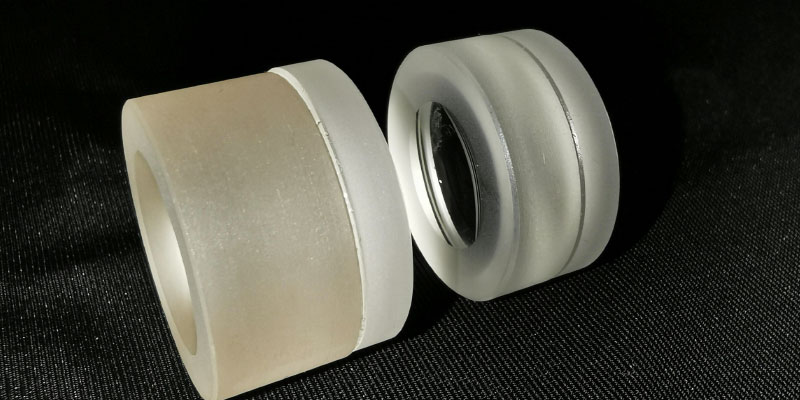
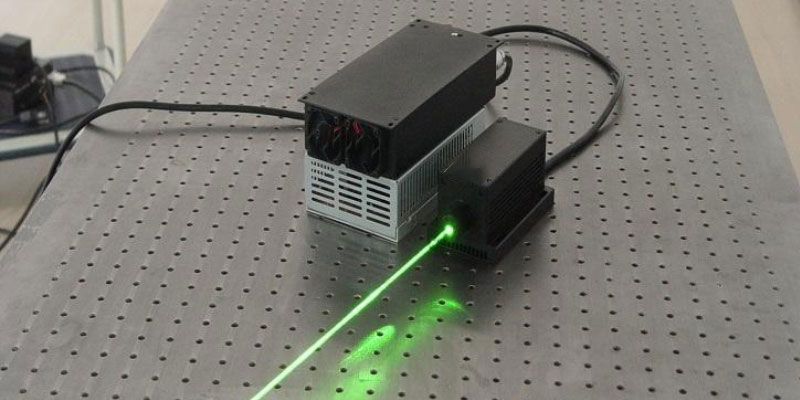
The helium-neon laser represents a quintessential gas laser and ranks among the most extensively utilised laser types in both laboratory and industrial settings. Characterised by compact dimensions, high laser power output,laser lens and superior beam quality, it finds widespread application in material processing, medical diagnostics, precision measurement, and related fields. Its operational principle involves energising a specific mixture of helium and neon gases to induce ionisation, thereby generating laser radiation.
2.Selection of Helium-Neon Mixture Ratios
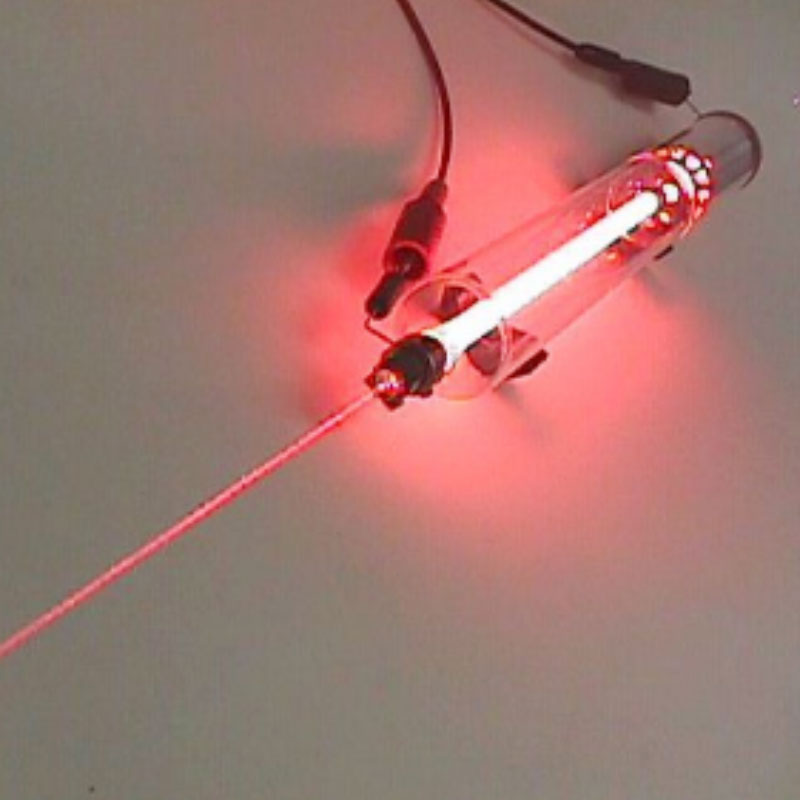
The ratio of helium to neon significantly influences the laser power and output wavelength of helium-neon lasers. Typically, the volumetric ratio ranges from 1:10 to 1:20, with 1:10 being the most commonly employed. Variations in this ratio alter the ionisation voltage and impedance of the gas discharge, consequently affecting laser generation efficiency.
3.Achieving Gas Ionisation

Gas ionisation is the prerequisite for laser generation in helium-neon lasers. During ionisation, electrons are stripped from gas molecules, forming plasma which subsequently produces laser light.
To achieve gas ionisation, helium and neon must be exposed to a direct current or high-frequency electric field. This electric field induces ionisation within the gas and promotes three key reactions: ionisation of diatomic gas molecules, recombination of ions with molecules, and excitation of ground-state molecules. Once ionisation occurs, ions are accelerated by the electric field. Electrons and ions move in opposite directions, generating currents at the upper and lower ends of the discharge path.
4.Regulation of Gas Flow and Discharge
During operation of helium-neon lasers, gas ionisation and excitation demand substantial energy, necessitating precise control of flow and cooling. Specialised structures within the laser chamber maintain gas circulation. Concurrently, current regulation is essential to modulate discharge energy and laser output characteristics.
【Conclusion】
The neon laser&helium laser represents a widely applied laser technology. Its principle of operation involves mixing helium and neon gases in specific proportions, followed by energy injection to ionise the gas mixture, thereby generating laser light. This laser offers advantages including high power output, compact size, and superior beam quality, leading to extensive utilisation across industrial, medical, and scientific research applications.
optlenses

Related Blogs