1.Fundamental Differences in Light Emission Principles
Although both Adaptive Led (light-emitting diodes) and lasers emit light, their underlying principles are fundamentally distinct:
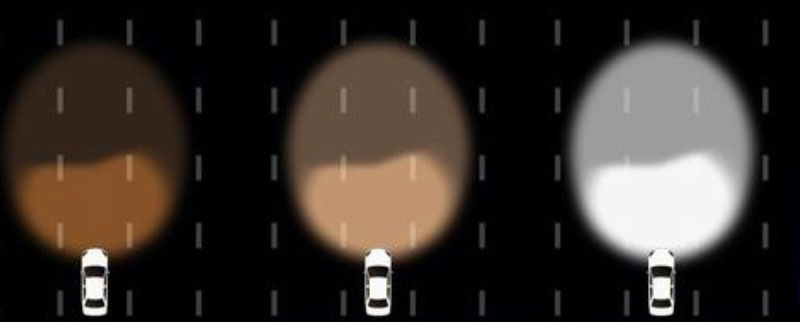
- LEDs emit light through the recombination of electron-hole pairs within semiconductor materials, resulting in light scattered in all directions.
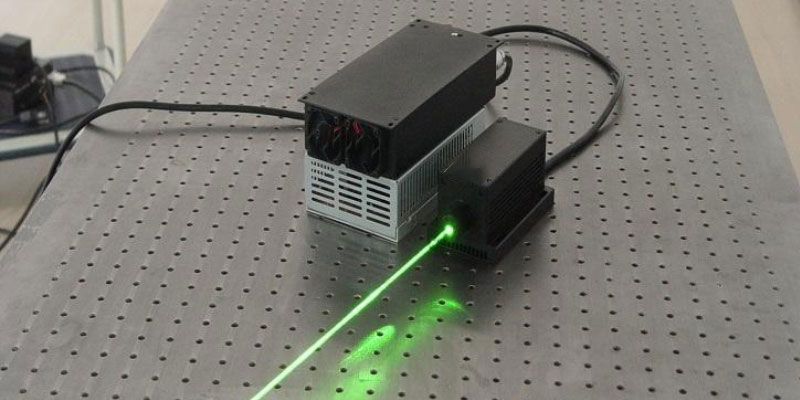
- Lasers, however, generate light through stimulated emission, where all photons are in perfect phase, forming a highly concentrated beam.
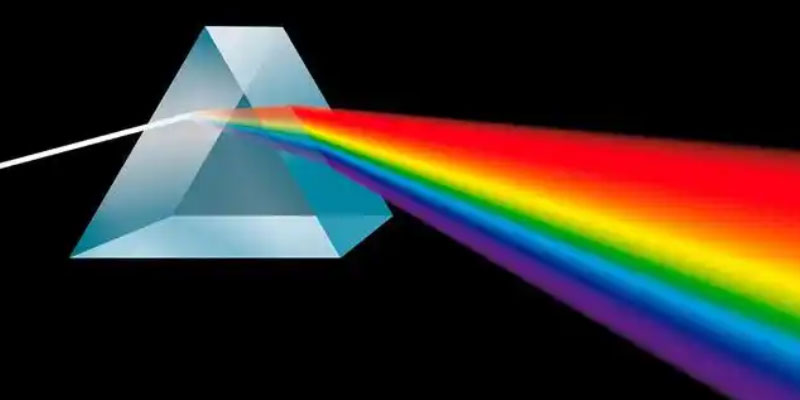
- LED light has a broad spectrum (approximately 30-50 nanometers), while laser light has an extremely narrow spectrum (less than 1 nanometer).
2.Distinct Advantages in Application Scenarios
These two light sources each excel in specific practical applications:
Adaptive Led Advantages:
Ideal for large-area uniform illumination (e.g., indoor lighting, displays)
Generate minimal heat, with lifespans exceeding 50,000 hours
Cost-effective, ideal for consumer products
Laser Led Specialties:
Applications requiring high-precision focusing (e.g., laser cutting, medical surgery)
Long-distance transmission (laser ranging, communication)
Special visual effects (laser shows, holographic projection)
3.Visible Differences to the Naked Eye

Even without technical specifications, we can intuitively perceive their distinctions:
- Brightness perception: Lasers deliver higher luminance per unit area, though LEDs may offer greater total luminous flux
- Beam characteristics: Lasers maintain a narrow beam over thousands of meters, while LED light rapidly diverges
- Color purity: Lasers exhibit excellent monochromaticity; Adaptive Led achieve rich colors through mixing
- Safety considerations: Direct laser exposure may damage the retina; LEDs are relatively safe
Difference Between Laser Led And Adaptive Led lies in the fact that laser headlights are only one-tenth the size of conventional LEDs, yet their illumination distance exceeds that of LED lights by more than double. The reduced size of laser diodes allows for a significant downsizing of traditional automotive headlights, granting vehicle designers greater creative freedom. This enables the design of more modern, technologically advanced models, leading to greater diversity in automotive styling. Additionally, laser headlights retain most advantages of LED headlights, such as rapid start-up response, slow light decay, compact size, low energy consumption, and extended lifespan.
optlenses

Related Blogs